Cool maps and the globe

Cool maps and the globe
Showing posts with label Thomas Jefferson. Show all posts

Friday, October 10, 2008

Local Field Trip; Seward House


Mrs. Smith 13 Nov 07
Education 401 Grade 8/Civil War

I. Pre Instructional Phase
1. NYS Standards:
SS Standards 1, 3& 5- Students will use a variety of intellectual skills to demonstrate their understanding of major ideas, eras, themes, developments, and turning points in the history of the United States.
- use a variety of intellectual skills to demonstrate their understanding of the geography of the interdependent world in which we live- local and national - including the distribution of people, places and environments over the Earth’s surface.
- use a variety of intellectual skills to demonstrate their understanding of the necessity for establishing governments; the governmental system of the United States and other nations; the United States Constitution; the basic civil values of American constitutional democracy; and the roles, rights and responsibilities of citizenship, including avenues of participation.
ELA Standards 1, 3, &4- Students will read, write, listen, and speak for:
- information and understanding.
- critical analysis and evaluation
- social interaction
2. Lesson Objectives: (LWDAT= Learner Will Demonstrate Ability To)
Cognitive:
a) Given the stories and information presented in the Seward House, LWDAT identify and describe Seward’s role in the Lincoln administration.
b) Given the stories and information presented in the Seward House, LWDAT identify and describe the relationship between Seward and Lincoln during the Lincoln administration.

Affective:
a) LWDAT give the proper attention and respect to the adult tour guides.
b) LWDAT be in a group with his or her peers and pay attention to the tour without fooling around with his or her friends.

3. Content:
Concept- Students will learn about Seward, the Seward family and Seward’s role in the Lincoln government. Before going to the field trip students will be learning about the civil war, Seward, and Seward as an abolitionist.
Key Vocabulary-
abolitionist
administration
Task Analysis- Students will be given a tour of the Seward House in Auburn, New York
- Focus will be on the relationship between Seward, Harriet Tubman, and other abolitionists
- On the relationship between Seward and Lincoln
- Seward’s role in the Lincoln administration
4. Instructional Aides/ Resources
- Tour phamlet
- Study guide
5. Student Modifications:
- positive reinforcement for students that have classroom disturbance problem
II. Interactive Phase
6A. Set/ Focusing Event:
“Today we will be touring the Seward House. William Seward, who was given the house from his father-in-law, served many different political positions in the government, including: statesman, Secretary of the State, Senator, and New York Governor. He and his wife, Frances, were active abolitionists who were friends with Harriet Tubman and helped with the Underground Railroad by hiding runaway slaves in the Seward House. There are seventeen rooms in the house that have been preserved by the museum personnel and will be toured by the students. There is an extensive library with many rare first edition books that Seward collected, amazing pieces of art by well known artists, and collections of souvenirs that Seward had brought back from his travels.
“The first thing that I want to say is that after we are done with the tour, everyone will be responsible for writing a reflection on your impressions of the house and your favorite part of the house. Also, later on we will be working on a project together about the house. This means that all students must make sure that you pay close attention to what you are being told about the Seward House and the Seward family. Next, I want to talk about how we are going to act. Remember that I expect everyone to respect all adults and no horsing around with each other. There are priceless artifacts in this house and we do not want to ruin anything. If there are any questions you want to ask the tour guides, then raise your hand just like you would in our classroom. I expect everyone to be on their best behaviors because you are representing our school and we want everyone to think our school has well behaved students. Now please split into the two pre assigned groups and we will begin the tour. ”
***Have the tour and make sure that students are behaving
Formative Check: Answer all questions that students in the group have and the reflection that students hand in.
Closure:
“I hope that everyone had a good time at the Seward House and learned a lot of neat things about him and his family.
Extending Activity:
“For homework, write a reflection about the Seward House and your favorite part of the house that has to be at least one page in length, but can be longer.
“Looking ahead, we will also be doing a poster project on the Seward House. I will have five groups of five people that I will assign within the next couple of days. We will go to the library and do some further research on Seward, his role in the Lincoln administration, and anything else interesting about him and his family. I will be handing out a rubric when we start the research, so you guys will know exactly what I expect from you.


Colonies of America Lesson 3

Mrs. Smith Founding Fathers (Lesson 3)

I. Pre Instructional Phase
1. NYS Standards:
SS Standards 1, 2,3& 5- Students will use a variety of intellectual skills to demonstrate their understanding of major ideas, eras, themes, developments, and turning points in the history of the United States.
- use a variety of intellectual skills to demonstrate their understanding of major ideas, eras, themes, developments, and turning points in world history and examine the broad sweep of history from a variety of perspectives.
- use a variety of intellectual skills to demonstrate their understanding of the geography of the interdependent world in which we live- national and global- including the distribution of people, places and environments over the Earth’s surface.
- use a variety of intellectual skills to demonstrate their understanding of the necessity for establishing governments; the governmental system of the United States and other nations; the United States Constitution; the basic civic values of American constitutional democracy; and the roles, fights and responsibilities of citizenship, including avenues of participation.
ELA Standards 1, 2, 3, &4- Students will read, write, listen, and speak for:
- information and understanding
-literary response and expression
- critical analysis and evaluation
- social interaction
2. Lesson Objectives: (LWDAT= Learner Will Demonstate Ability To)
Cognitive:
a) Given the information provided about Founding Fathers, LWDAT critically analyze and describe the Founding Fathers importance in the beginning of the United States.
b) Given the information about the different compromises, LWDAT understand the Founding Fathers’ legacy.


Affective:
a) LWDAT listen and respect his or her peers and teachers while presentation going on.
3. Content:
Concept- Students will be learning about the Founding Fathers and the legacy that has extended into modern government
Key Vocabulary-
John Adams-helped lead the opposition against the Stamp Act and other British acts and believed that American Independence was his calling. Adams became the second president and tried very hard to create a bipartisan administration by collaborating with Jefferson
Benjamin Franklin- was 81 at the time of the Convention, but had fought for colonists rights for many years and had gotten France to help with the American Revolution.
Thomas Jefferson- owned a small plantation and believed in strong states rights, with little government control. He was secretary of the state to Washington and became president later
George Washington- most respected man and great general from the American Revolution, who was the first president and set many of the precedents that were followed by his successors for years.
Task Analysis
- key people in the students’ notebooks
- discuss the different founding fathers
- Power Point Presentation with many different photos of the men and the convention
4. Instructional Aides/ Resources
- whiteboard markers
- notebooks
- Power Point
- My book>Founding Brothers by Ellis


5. Student Modifications:
- positive reinforcement for students that have classroom disturbance problem
- visuals on the Power Point
- Being read to by the teacher; helps those with reading problems
II. Interactive Phase
6A. Set/ Focusing Event:
***Write the vocabulary on the board
“Good morning class, today we will be doing something a little different, so I hope that we all have fun. I also want to let you know that this was a quick unit and we are finishing the unit today. Tomorrow we will be doing a review day and the next day we will be having a quiz on what you learned, so make sure that you prepare for the next two days.
“I have written six very important names on the board. These are six of the many “Founding Fathers”. I have a Power Point to show you and you will get to see some pictures of the different men, the Constitutional Conventions, and the men with their families.
“We’re going to write some ideas on the board. If you were one of these men who were building a new government, remember that you want to build a lasting government because this will be part of your living legacy, what would you want to include? Also, remember we have already talked about the Article of Confederation and why they failed, so don’t add anything that won’t work.
Bridge:
“Now that we know what we would do, let’s learn about the “Founding Fathers” and learn about what they did
6B Implementation:
***start Power Point that will have pictures and talk***
“George Washington I am going to talk about first because he was one of the most respected and well known men that left a legacy that still lives on today, which is the Constitution and the United States government (read from book pgs 120).
“George Washington was an accomplished general in the American Revolution. He had such vitality about him that it almost seemed natural for him to be elected the first President. Since he was the first president, it was very important for him almost to be perfect because the presidents after him would copy a lot of the things that he did. For example, there is no where in the Constitution that the president creates a Cabinet; however, Washington found that he needed a Cabinet to help advise him.
“He also was president for only two, four year terms. When asked if he would run for a third term he declined because he did not believe that anyone should serve more than eight years as a president. He believed that there should be rotations in the government office positions. In his “Farewell Address”, Washington wrote about the need for the United States to keep national unity and cohesiveness. He also said that excessive partisanship, such as in political parties, will sectionalize government and not allow cooperation, and therefore, is a bad thing. Lastly, he wrote about how the United States needed to independent from European affairs because there were always so many problems over there. The United States had the ability to isolate itself because the United States is on a totally different hemisphere than Europe.

Formative Check:
”Why was George Washington well known and respected? Name one thing that Washington instituted that was not in the Constitution.
Bridge:
“ Now, we are going to move on to Thomas Jefferson.
Implementation:
” Thomas Jefferson drafted and signed the Declaration of Independence before the United States existed. After the United States won in the American Revolution, Washington had Thomas Jefferson as his secretary of state. Jefferson was important because he believed in as little national control as possible over the states. This is possibly because he had a small plantation and sold his own things, so he wouldn’t want government interference.
“Jefferson tried to help the other politicians’ compromise in order to get a well working government organized. For example, when Hamilton and Madison were on opposite ends of Hamilton’s fiscal plan, Jefferson offered to host a dinner party at his house where the major players could iron out a compromise. On June 20th, 1790, Jefferson got Madison and Hamilton together to compromise. Madison said that he would let Hamilton’s deal pass if Hamilton could guarantee that the nation’s capital would be relocated to the Potomac River, which was in the south, instead of staying in Philadelphia.
"After Washington retired, Jefferson claimed that he was going to retire and work on his small plantation. However, he soon became the front-runner for the presidency along with Adams. When the election came up, Adams took New England and Jefferson took the south; however in the end Adams won.

Formative Check:
”What type of government did Jefferson support and why? What was Jefferson’s job when Washington was president? After Washington stepped down, who supported Jefferson in the cadency?

Bridge:
“We are now going to move into Adam’s and his presidency.
Implementation:
“Adams felt that his life project was the American Revolution, so after he achieved his goal of independence it was natural for Adams to become part of the new government. First, in 1765, Adams helped lead the opposition against the Stamp Act and all the other British acts that were unfair. He truly believed that the colony should not have to pay these extra taxes because of the ideology of “No taxation without representation”. (read pgs164 bottom 165) John Adams was also well known for his writings in Thoughts on Government which was a pamphlet that was “the Atlas of independence” and later became a guide to the first state constitutions. Adams was also successful in getting Washington to be the head general over the Continental Army during the American Revolution.
“Then, in 1777, Adams joined Franklin and helped in the war effort by going to Paris and convincing the French that the colonists were serious about becoming an independent nation. Soon after his talk, the French came to the aid of the colonists. He also helped draft the Massachusetts Constitution, then went back to France to work on the peace treaty.
“Adams believed in a very different philosophy of government than Jefferson. He believed that a strong central government can be very advantageous as long as there are checks and balances put in place. He believed in having a bicameral, or two housed, executive branch. Unfortunately, as the first vice president there wasn’t much for him to do unless the president died and he took over.
“Even though his wife became his closest confidant, he also worked closely with Jefferson when Adams became president. Adams wanted to make sure that the government wasn’t dominated by only one ideology.

Formative Check:
” What does Adams’ believe that government should be organized as? Name two things that Adams’ did to help the American Revolution.
Bridge:
” Next, we are going to work on learning about Benjamin Franklin
Implementation:
“Franklin was the oldest man participating in the Conventional Constitution at the age of 81. He had fought for the rights of colonists for many years and worked with Adams to get the help of the French during the American Revolution. He was considered one of the most outstanding and well known men at the Convention, second only to George Washington himself. He also was a great compromiser and helped delicately form the Constitution.”
Closure:
“Before we end today, we are going to do an activity. I want everyone to stand up. Now, before you can sit down everyone has to tell me something that they learned today about the founding fathers.
Extending Activity:
“For homework, you need to study because tomorrow is review day and the next day will be a quiz. There will be a prize for whoever does the best in the game and on the quiz.

The World At Your Hands

The World At Your Hands

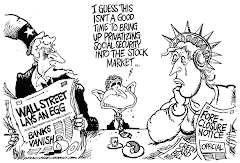
Political Cartoon

Political Cartoon

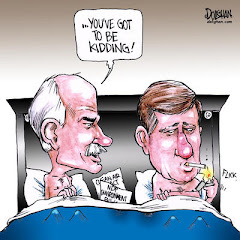
Political Cartoon 2

Political Cartoon 2

Followers